

USES & ROLES OF CACAO
IN MODERN MESOAMERICA
USES & ROLES OF CACAO
IN MODERN MESOAMERICA
Image by
CONTENTS
Image by

INTRODUCTION
This article is largely inspired by the extensive work of Cameron L. McNeil, particularly her paper Traditional Cacao Use in Modern Mesoamerica1, in which she provides a comprehensive and engaging exploration of traditional cacao use in Mesoamerica. She put up this piece by drawing from seven recent publications and enriched it with her own fieldwork. Despite centuries of cultural cleansing, cacao traditions have endured, reflecting both resilience and adaptation.
McNeil’s research is a treasure of information and an inspiring effort to document and preserve the remnants of a nearly lost cultural heritage.
In her own words: “Scholars should work to document traditional Mesoamerican cacao use before this knowledge is lost.”
We plan on leading our own attempts to gather information from lesser-known cacao communities, particularly in South & Central America. In the meantime, sharing this article is our way of answering the call.
This article focuses on the existing material available, primarily from communities in Guatemala, Honduras, Mexico, and Belize. It does not attempt to generalize cacao traditions across all indigenous communities that continue to uphold them.

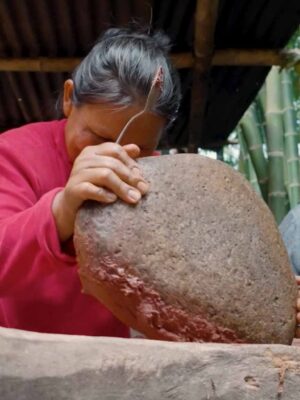
Image by
Cacao Market in Mesoamerican Communities
In many modern Mesoamerican communities, today’s cacao market is restricted to trade within the local communities in which it is produced, or between closely associated areas.
When possible, families keeping up with the traditions grow cacao in their backyards and gardens and sell the seeds or cacao tablets to market vendors who sell it to other members of the community. Some of these are then traded to the communities in the Highlands where cacao trees won’t grow. Little of this product reaches the international market.
A Diverse Range of Beverages Made From Cacao
A variety of cacao-based beverages are consumed in Mesoamerican communities. Many of these drinks remain undocumented yet persist in regions where cacao pods are accessible, either through local production or trade.
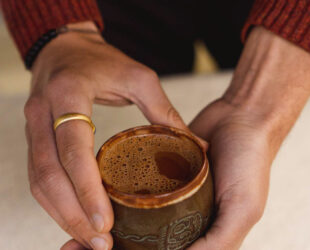
One such beverage, refresco de pocha, is common on the Pacific coast of Guatemala. Fresh cacao pulp and seeds are placed in water and beaten until the pulp loosens. The seeds are then removed, and sugar is added, creating a thick, sweet-and-sour tropical juice.
A similar process is used to make chicha, a mildly alcoholic drink resulting from the fermentation of cacao pulp, sugar, and water.
However, the most widely consumed cacao-based drinks are made from cacao beans.
The range of these beverages closely resembles those recorded at the time of Spanish contact. Among them are atole, chilate, batido, pinole, pozol, and chocolate.
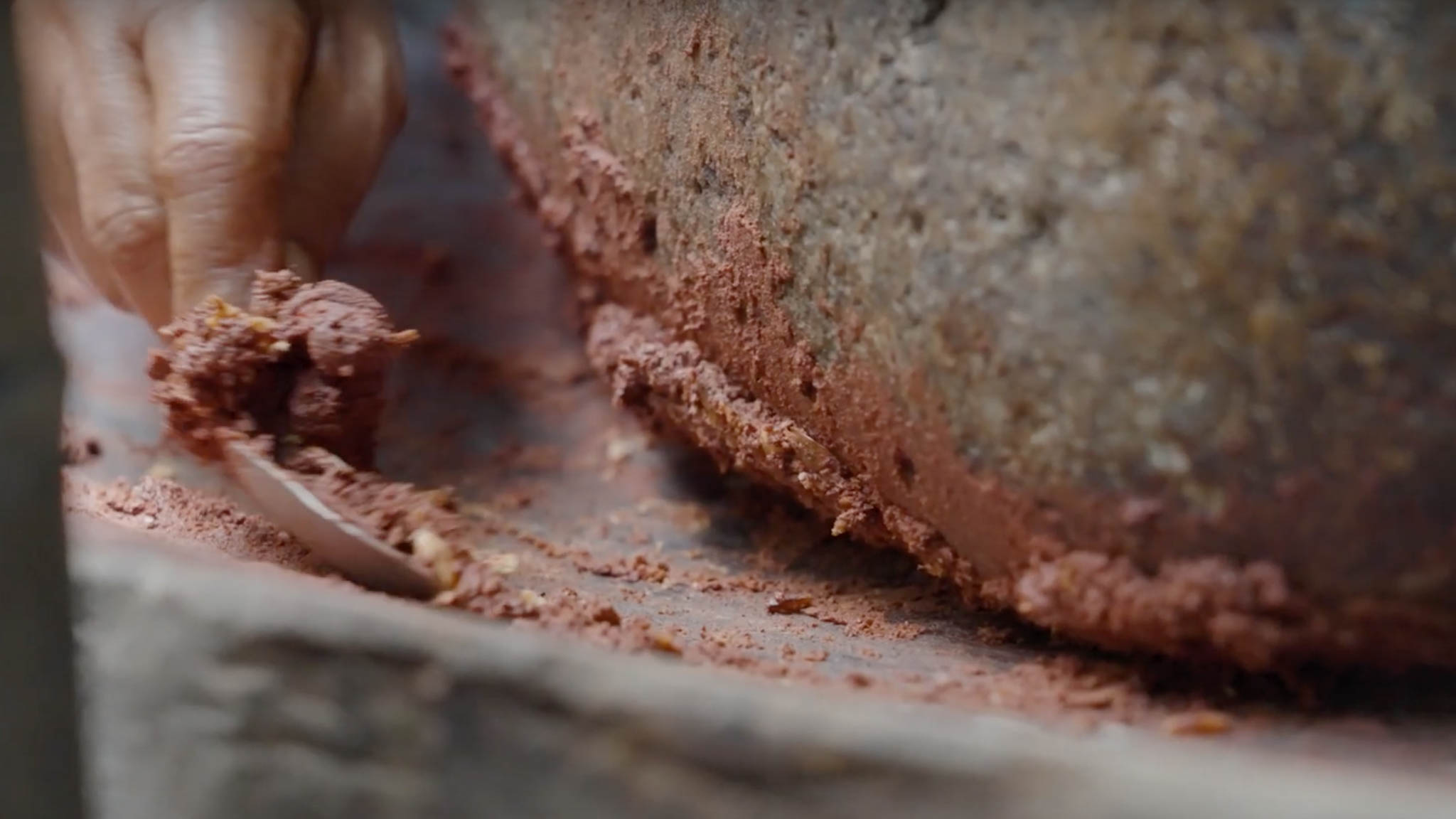
The preparation methods vary between communities and even households, making it difficult to assign a single recipe to any one name. Modern cacao beverages are often made from purchased chocolate tablets, which we would call Origin Cacao. These tablets, however, aren’t solely made of 100% pure cacao but are typically blended with a high ratio of panela (unrefined sugar) and natural flavorings such as vanilla and cinnamon.
Maize Atole is the most common drink in traditional Mesoamerican communities and is actually treated as a food. It may be made with ground maize or tortillas, mixed with water, cacao when it’s available and possibly some additives.
There’s an impressive range of recipes which depend on both the region where and the reason why they are prepared. It encompasses all forms of ground cacao seeds, finely or roughly ground, toasted or untoasted and most commonly involve the use of maize (again in different forms), water and additives such as sweeteners (honey or panela), flowers, and spices.
Cacao is also used in foods such as moles and tamales.
Cacao’s Role in Rituals
Although cacao consumption has diminished since colonization, it continues to hold significance in certain communities. Ethnographers have documented its role in rituals and ceremonies, often as an offering to ancestors, deities (such as rain gods, the Earth Goddess, and mountain gods), and even Christian saints.
Cacao remains an important gift for major life events. In Guatemala, it is commonly used for holidays, childbirth, breastfeeding mothers, marriage proposals, and Easter. It can be presented in various forms—whole beans, ground beans, complete pods, tablets, or as a prepared beverage.
Some of its notable ritual uses include:
- Cacao and Ancestors: Many ceremonies use cacao to honor ancestors. Among the Lenca people of Honduras, for example, cacao consumption symbolizes continuity with ancestral traditions. Communal drinking of cacao during these ceremonies fosters unity among participants.
- Cacao in Easter Ceremonies: The association of cacao with rebirth—whether of ancestors, maize, or Christ—makes it particularly relevant to Easter celebrations. In some communities, people replace their daily coffee with cacao in the weeks leading up to Easter to maintain spiritual purity.
- Offerings to Rain and Fertility Deities: Easter celebrations coincide with traditional rain ceremonies that mark the start of the agricultural season. Historical records describe the Aztecs offering vessels of cacao to the Tlalocs (rain and mountain gods). Similar traditions persist today in Guatemala, Honduras, and Mexico, where cacao is poured into cenotes, caves, springs, and ponds as offerings to deities ensuring fertility and rainfall.
- Mythic Associations: Cacao had significant mythological importance during the Classic period, and its symbolic ties to rebirth, rain, and ancestry persist in modern traditions.
Cacao and Life Passages
Cacao continues to be used in religious and secular events marking key life transitions, including birth, marriage, and death.
Some examples include:
- Birth and Motherhood: In Maya communities, midwives play an essential role in childbirth. Their compensation often includes cacao, which is also recommended in the diets of expectant and postpartum mothers. Pinole for example—a mix of toasted ground maize and ground cacao—is believed to enhance breast milk production. It is also recorded that cacao plays an important role during pregnancy, moments before birth and sometimes during delivery.
- Baptism and Godparent Gifts: Spanish chroniclers noted that cacao played a role in pre-Columbian baptism ceremonies. Today, it is still sometimes required as a gift for one or both godparents.
- Marriage Arrangements: In many indigenous communities, cacao remains an important part of marriage negotiations. The groom’s family traditionally presents cacao as a gift to the bride’s family, a practice documented since the 1600s.
- Death Rituals: While cacao was a common offering in elite pre-Columbian burials, its use in modern funerals is less frequent. However, in some regions, traditions persist. For example, it was recorded in the 1930s in Mitla, Mexico, that chocolate was poured on graves during Todos Santos (All Saints’ Day), while in Tehuantepec, chocolate was placed on family altars. More recently, McNeil recorded that in 2005, pataxte (Theobroma bicolor, a relative of Theobroma cacao) was an essential part of Q’eqchi’ altars for Día de los Muertos.
CONCLUSION
Several unifying themes emerge in traditional Mesoamerican cacao practices:
- It plays a role in ensuring agricultural success, whether through its association with maize, water sources, or offerings to gods and ancestors.
- It marks significant life transitions, from birth and marriage to funerary rites.
- It continues to serve as a link to ancestral traditions, reinforcing cultural continuity.
Despite these enduring customs, traditional cacao use is increasingly replaced by more accessible alternatives such as coffee and mass-produced beverages. Following up on McNeil’s statement, we think that, not only scholars, but anyone involved with cacao in a way that intersects with native cultures and traditions must continue documenting and honoring these traditions before they disappear entirely.

SOURCES
REFERENCES
- Cameron L. McNeil, ed., Chocolate in Mesoamerica: A Cultural History of Cacao, Maya Studies. Gainesville: University Press of Florida, 2006. ISBN 9780813033822.
– Chapter 17, written by Cameron L. McNeil: Traditional Cacao Use in Modern Mesoamerica.
BACKGROUND MATERIAL
• Cameron L. McNeil, ed., Chocolate in Mesoamerica: A Cultural History of Cacao, Maya Studies. Gainesville: University Press of Florida, 2006. ISBN 9780813033822.
• Patchett, Marcos. The Secret Life of Chocolate. London: Aeon Books, 2020. ISBN 978‑1‑911597‑06‑3.
• Coe, Sophie D., and Michael D. Coe. The True History of Chocolate. 3rd ed. London: Thames & Hudson, 2013. ISBN 978‑0‑500‑29068‑2.